Updating Our Custom MCI Bus Restoration – Chrome, Solar, AC & More | Gypsy Bus Ep 6
MCI Bus Conversion Episode 6: Major Progress Inside and Out
The MCI bus transformation continues, and Episode 6 shows just how far this one-of-a-kind build has come. What began as a stripped-down vintage coach is steadily becoming a completely custom luxury motorhome. This stage of the project goes far beyond cosmetic improvements, with extensive fabrication, structural repairs, electrical planning, plumbing, insulation, and exterior restoration all moving forward.
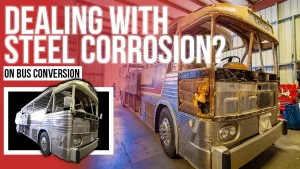
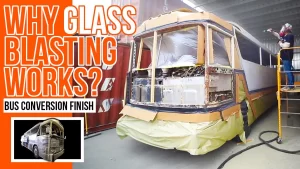
One of the biggest changes is happening along the exterior. The lower skins have been removed, exposing areas that needed to be cleaned, straightened, repaired, and prepared for new panels. Rust and water-damaged sections are being addressed properly before anything is covered back up. Stainless trim pieces have also been removed, labeled, and evaluated, with new matching panels planned to give the finished bus a consistent appearance.
The roof is also taking shape. The current layout calls for 18 solar panels, two roof vents, Starlink, and awnings on both sides of the coach. The solar array will provide approximately 1,800 watts of power and work alongside a large Battle Born lithium battery bank. Together, these systems are being designed to give the owner substantial off-grid capability while still supporting shore power and the coach’s industrial generator when needed.
That generator required some serious custom engineering of its own. The existing compartment was widened to accommodate a large Wrico industrial generator, and the team is designing a slide-out system to make servicing easier. Custom ventilation will pull outside air across the generator’s radiator and exhaust the heat below the coach while flexible hoses allow the entire assembly to move in and out.
Plumbing and water storage are another major focus in Episode 6. Custom frames have been fabricated for the fresh, gray, and black water tanks. The fresh-water system will provide more than 100 gallons of capacity, while the tanks are being positioned with the proper slope for drainage and designed so individual sections can be removed for future service.
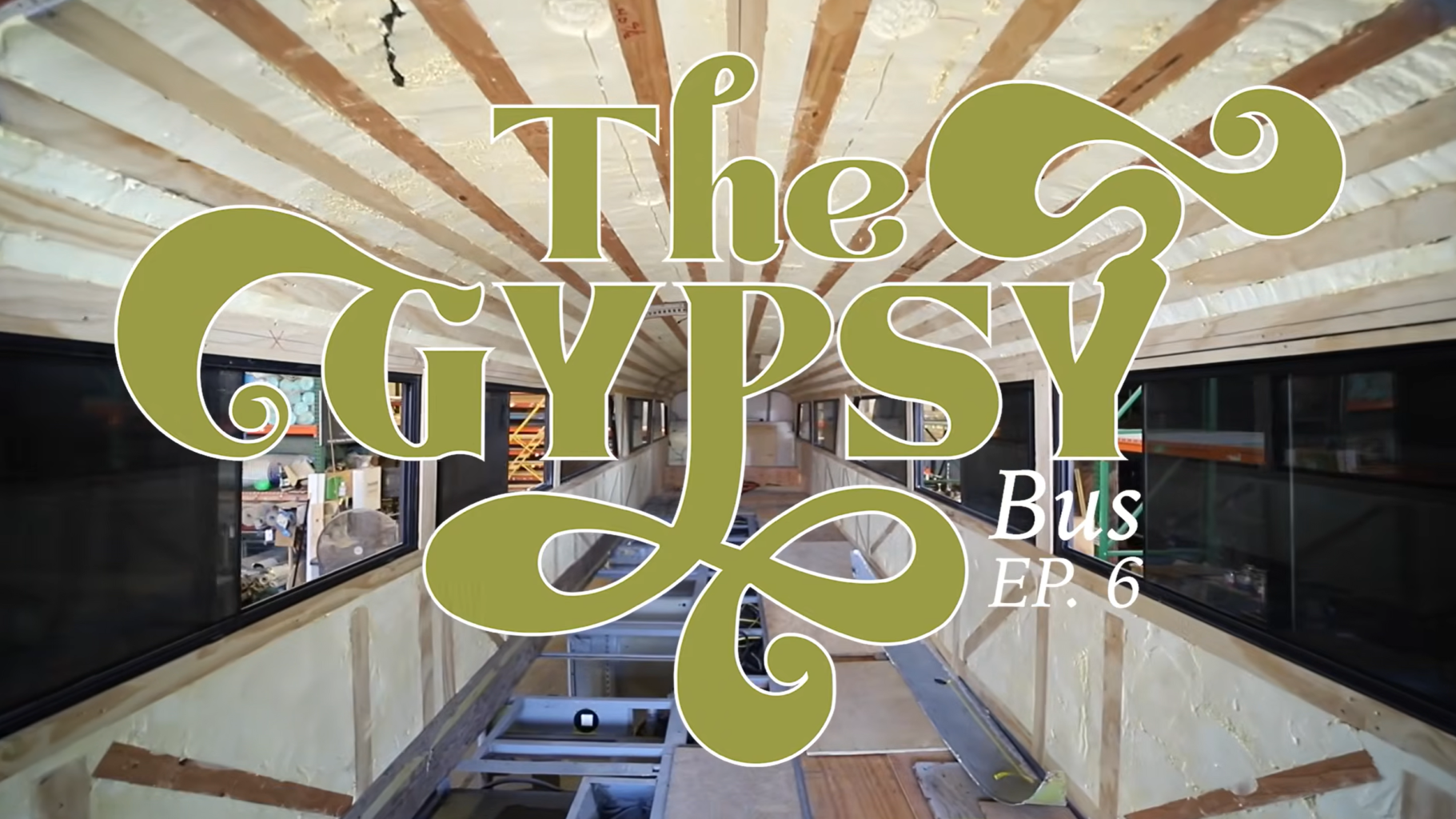
Inside, the transformation is becoming even more apparent. After blasting and preparing the interior surfaces, the team installed engine heat protection followed by spray-foam insulation. Wood blocking is being strategically installed throughout the walls and ceiling to provide solid mounting points for cabinetry, interior panels, and other components.
Electrical wiring is also being carefully routed through a center chase. Rather than simply hiding wires wherever space is available, the team is creating organized wiring harnesses protected by automotive loom and routing circuits to their planned locations throughout the coach.
The final interior layout is beginning to come into focus as well. Plans include a full bedroom with nightstands and custom cabinetry, a bathroom with a dropped shower floor for additional headroom, a washer and dryer, pantry, full kitchen, dining booth, television, and custom theater-style seating. Heated floors and a Hydro-Hot system will provide additional comfort while also supplying hot water and engine preheating.
Episode 6 demonstrates why a build of this scale is much more than simply converting a bus. As Jon explains, restoring a vintage coach can feel like restoring an old car and building a house at the same time. Every system has to work together, and every hidden structural or mechanical issue needs to be addressed before the finished surfaces go on.
There is still plenty of work ahead, but the vision is becoming much easier to see. With major exterior restoration underway and the electrical, plumbing, insulation, power, and interior systems taking shape, this MCI bus is getting closer to becoming the custom luxury motorhome envisioned from the beginning.